Hinduism Workshop

This morning, the children in Year 3 took part in a wonderful Hinduism workshop.  We welcomed Indriya and Krishna from the Hinduism Education Service, who shared lots of exciting stories and activities with the children.  The children were able to explore different artefacts, dress in traditional Indian costumes, and take part in drama and role play activities relating to the story of Rama and Sita and the Hindu festival of Diwali, which is the focus of our RE lessons this half term.  Indriya and Krishna taught the children a traditional dance called the dandiya rasa, which included ceremonial sticks, and they shared some meditation and devotional chanting (kirtan) with the children.

The children's behaviour was exemplary and they thoroughly enjoyed their morning.  It was great to see such enthusiasm for all the different activities, which really brought their learning to life.

We thank Indriya and Krishna for providing us with such an interesting and worthwhile morning's activities.




Chocolate Rocks!

In 3V this half term, we are learning all about rocks and soils.  We have been looking at the three different ways in which rocks are formed.

Igneous rocks are formed deep underground, where the temperature is extremely hot.  Pockets of magma (molten rock) form under the earth's surface.  When these cool and solidify, igneous rock is formed.

Sedimentary rock usually forms under the sea.  Layers of dust and grit become compacted over many thousands of years, eventually solidifying to create sedimentary rock.

Metamorphic rock is created when heat and pressure affect an existing rock to such an extent that its structure changes, creating a new type of rock.

We recreated these different processes using a very popular ingredient... chocolate!  

First, we broke a bar of delicious chocolate into pieces.  Mrs Sanders took it away to melt it carefully in the microwave.   This would be our igneous rock! 

Meanwhile, we layered several different chocolates and sweets in a baking dish.  These represented our sedimentary rock.  After the melted chocolate had been cooled and crumbled in (representing the erosion process that takes place over hundreds of years), it was taken away again to be heated in the oven.  The heat from the oven represented the metamorphic process.  

Once the dish was cool enough to handle safely, it was brought back into the classroom, where we looked at the changes that had occurred to our chocolate rock.

Finally, Mrs Vaqueiro broke the chocolate rock into bite-sized pieces for us to enjoy!

It was a delicious way to start the week!


Literacy Work - w/b 8th November 2021


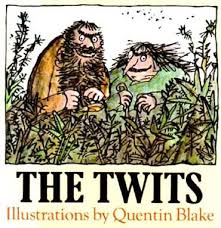
Next week, we will be working towards completing a piece of Unaided Writing, using Roald Dahl's 'The Twits' as a stimulus for our work.

The children will be pretending that they have spotted Mr Twit in the local park, no doubt plotting all sorts of mischief.  They will then write a letter to Mr Twit, describing what they saw.

It would be most helpful if you could discuss the following with your child in preparation for their Unaided Writing:

  • Discuss and practise using the word of the week ‘astonishingly
  • Think about where your child might have seen/met Mr Twit (e.g. in the park, in the town centre, etc)
  • Think of ambitious vocabulary to describe what Mr Twit looks like, as well as what he is like as a person.
  • Practise using conjunctions such as ‘despite’, ‘meanwhile’, ‘although’ and ‘however’.
  • Think about your child's opinion of Mr Twit and what Mrs Twit’s opinion might be.
Any work that is completed at home can be used to support your child's learning during the week, but will not be able to be used during the Unaided Writing task.

Many thanks,

Mrs Vaqueiro

RE - Exploring the story of Rama and Sita

We learnt a little about the basics of the Hindu faith with particular  reference to Diwali. 

First of all, we had a class discussion about celebrations, and thought about all the ways in which we celebrate important events in the year.  Most of the children in the class celebrate birthdays and Christmas, and shared their experiences of decorating their homes, getting together with friends and family, and enjoying special foods and gifts.

We then watched a BBC clip about a Hindu family celebrating Diwali.  The children spotted similarities between the Diwali celebrations and Christian celebrations.  The children knew that the Nativity story is central to Christmas, and we therefore read the story of Rama and Sita, which is  central to Diwali. 

The children then watched a traditional puppet show of the Rama and Sita story, before acting out the story for themselves in small groups using paper cut outs.